Platform
The mission operating layer for local AI and disconnected teams.
Models, mesh, sensors, devices, decisions, and evidence—controlled as one system when reachback is unreliable.
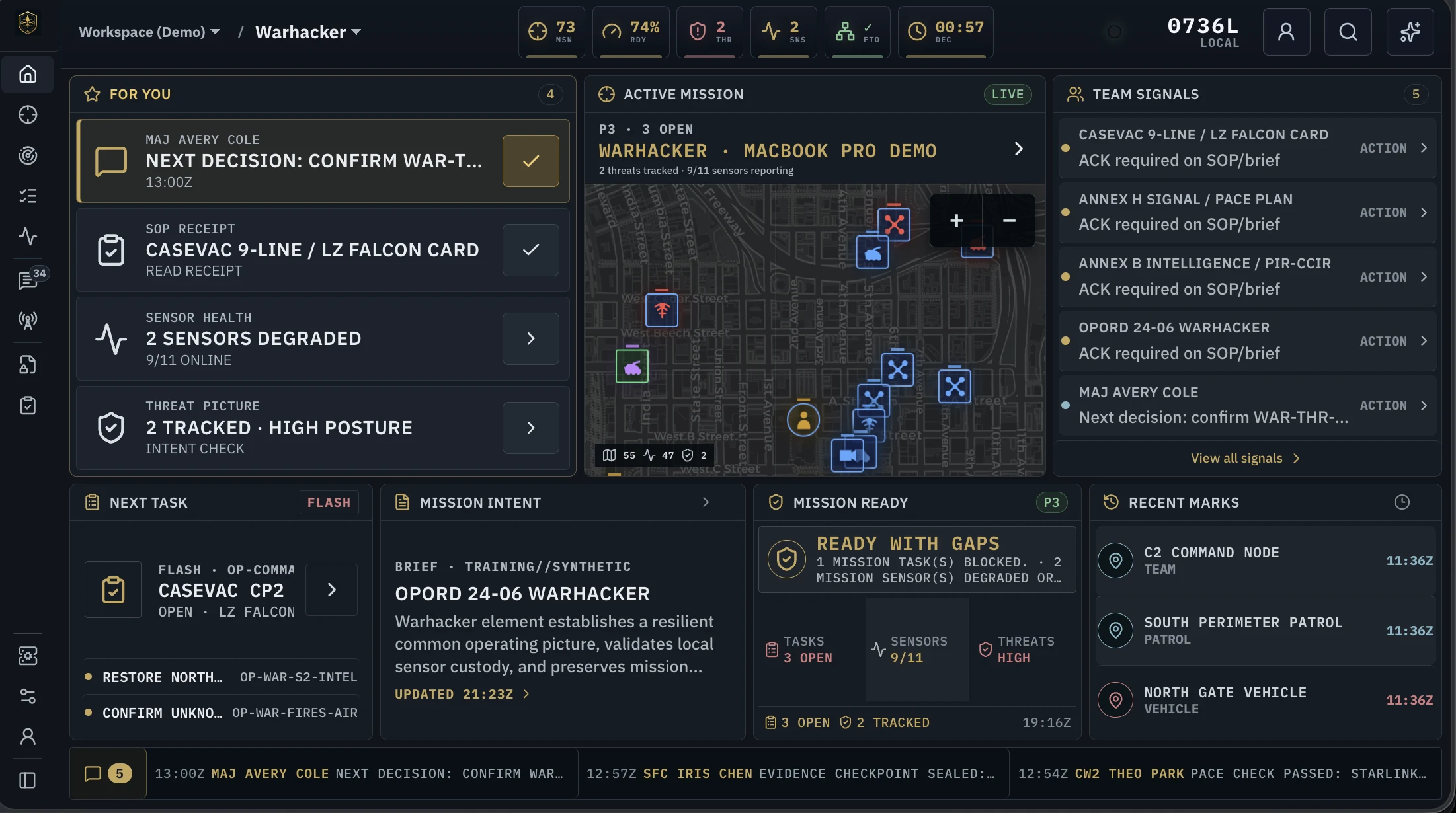
Platform Proof
Prepare, operate, coordinate, and review in one loop.
The mission record stays coherent from local field work through approved enterprise handoff.
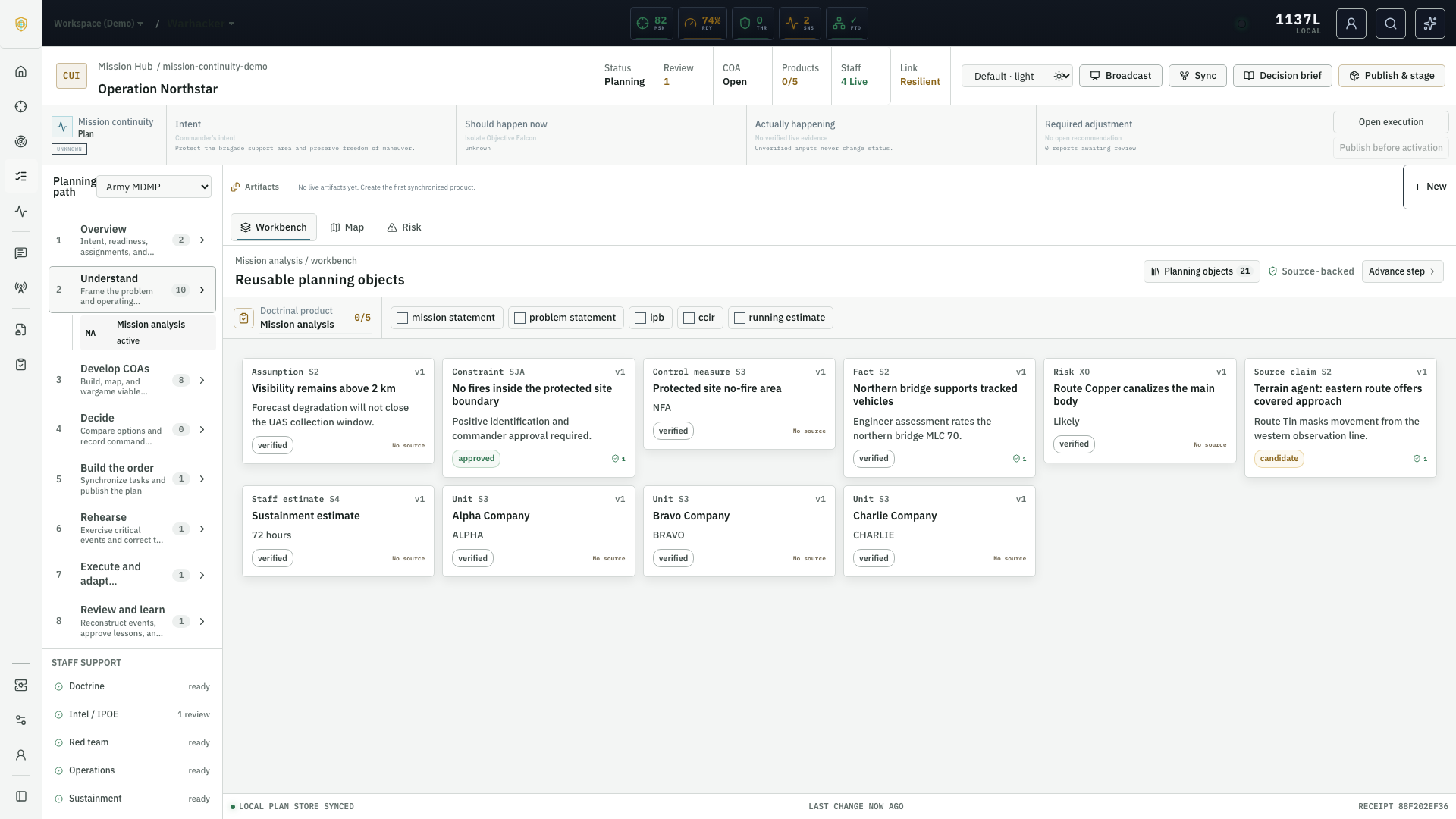
Prepare
Build the mission through collaborative estimates, reusable planning objects, source-backed products, and launch gates.
Cross-device Mission OS
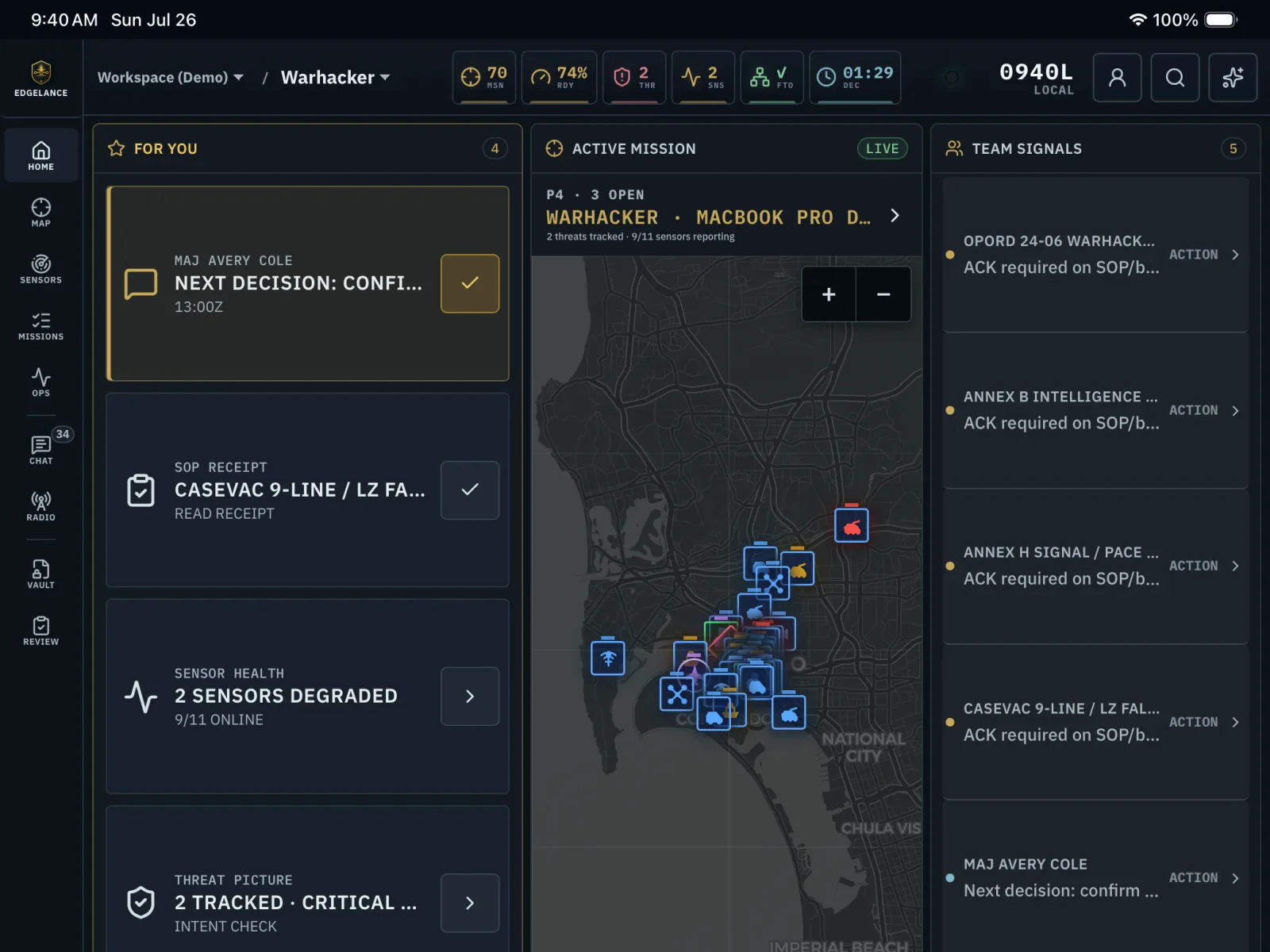
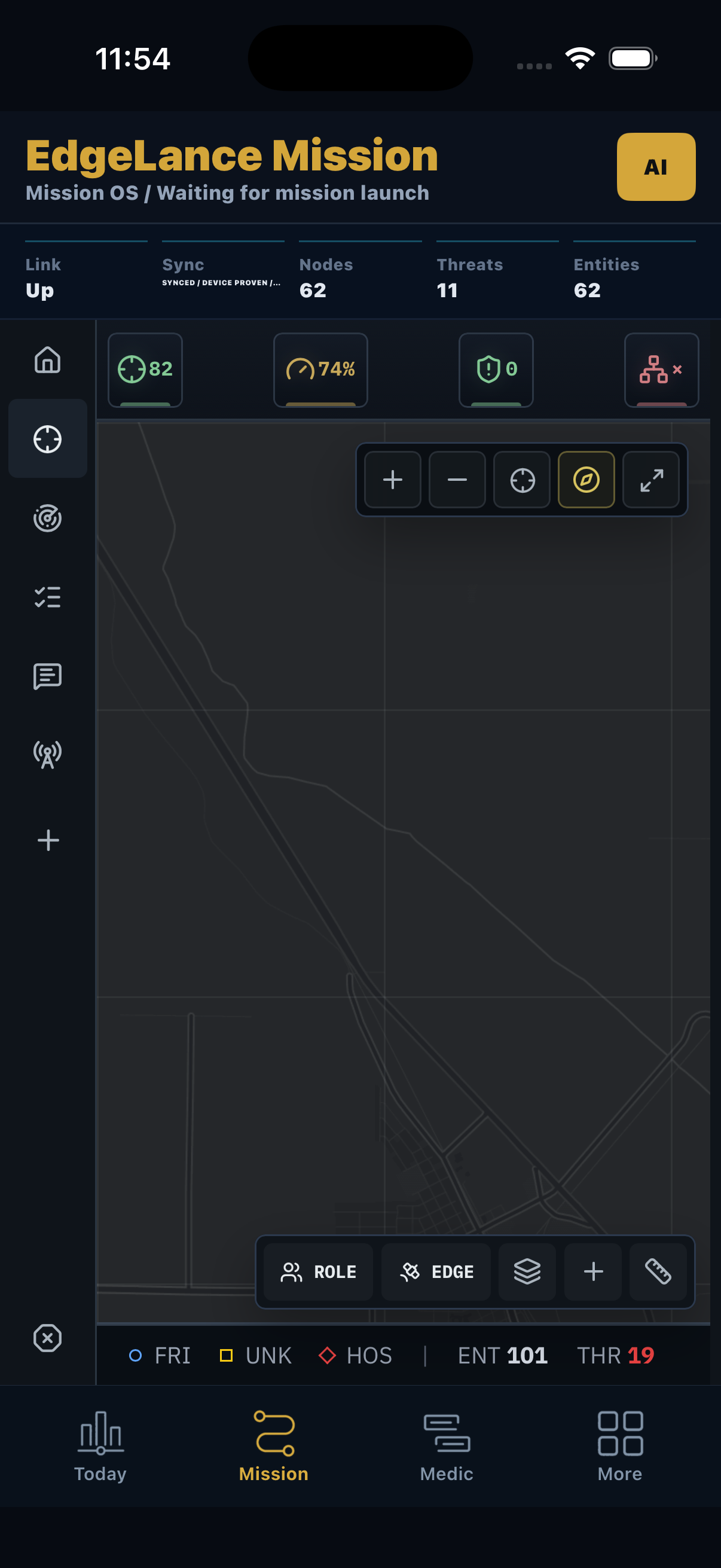
One mission. Every role-sized surface.
Command, field execution, and readiness adapt to each device while preserving one operational record.
Command surface
Common picture, readiness, threats, sensor health, and command actions.
Field surface
Local map, role, link state, threats, and next actions in hand.
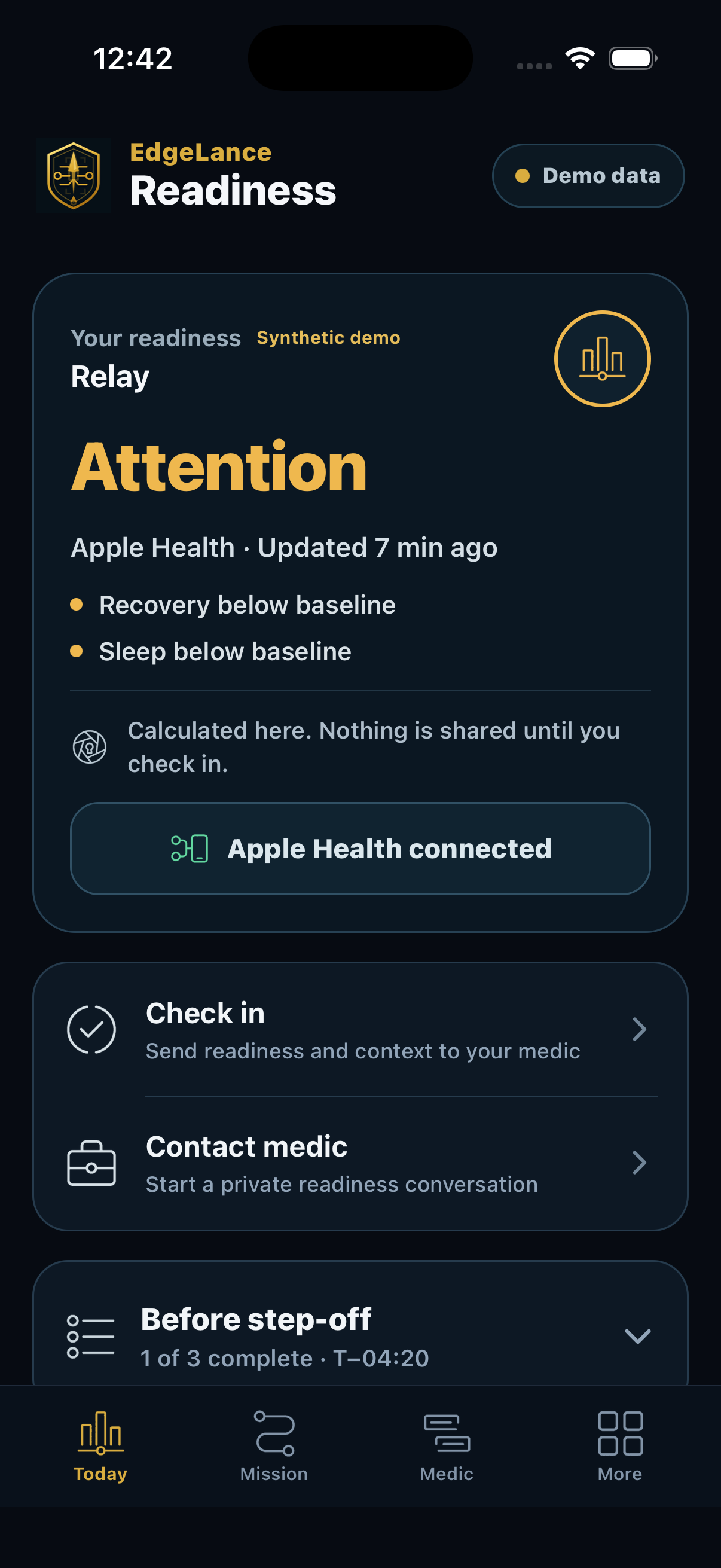
Readiness surface
Private on-device readiness signals shared only through operator check-in.
Actual product captures · iPad landscape · Native and mission iPhone views · Demonstration data
Product System
Four product surfaces, one mission record.
Buyers can evaluate EdgeLance as a full suite or as focused modules. The differentiator is how the modules reinforce each other during a real mission.
Mission
Plan, execute, and review from one governed record with role-specific command, operator, medic, analyst, and systems views.
Mesh
Move priority events, tracks, evidence, and context across mixed links while signed state persists on local nodes.
Fleet
Enroll nodes, verify posture, stage signed releases, manage model loadouts, and roll back when risk changes.
AI
Route models by capacity and classification policy; bind every answer to its evidence and provenance.
Why EdgeLance
The gap between enterprise C2 and tactical radios.
Deployment Paths
Designed for field nodes, base compute, and enterprise handoff.
Tactical edge
Managed phones, tablets, laptops, sensors, and relays with local inference and store-forward sync.
Base or FOB
Preferred local GPU or Kubernetes compute without removing fallback capability from field nodes.
Disconnected delivery
Signed software, model, and knowledge bundles moved by approved courier workflow.
Enterprise handoff
Approved mission events, evidence, and audit history exchanged with upstream systems.
Platform evaluation
Bring the mission flow.
Walk from staging to disconnected execution, enterprise handoff, and evidence review.